
Türkiye and Britain sign a security and defense partnership agreement on the sidelines of the NATO summit
Türkiye and the United Kingdom signed a new security and defense partnership document on the sidelines of the NATO summit in Ankara, during a meeting between Turkish President Recep Tayyip Erdogan and British Prime Minister Keir Starmer.
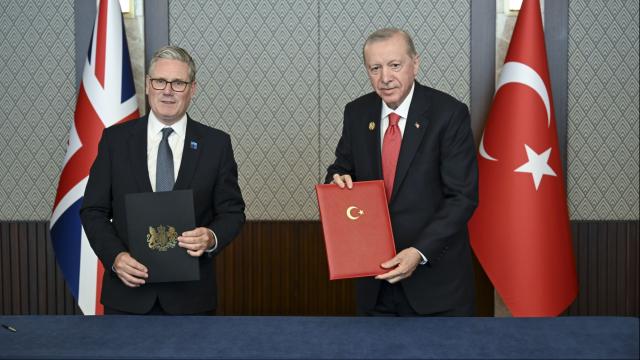
The Republic of Turkey and the United Kingdom signed a new “security and defense partnership” document, during a meeting between Turkish President Recep Tayyip Erdogan and British Prime Minister Keir Starmer on the sidelines of the NATO summit held in Ankara.
According to the joint statement issued after the meeting, the agreement represents an “important turning point” in the strong strategic partnership between the two countries, as two of NATO’s most prominent allies in Europe, in light of the rapid changes taking place in the European security environment. The statement explained that the partnership will allow Turkey and Britain to deepen consultation through new mechanisms in several areas, including: deterrence and defence, military cooperation, defense industries and technology, cybersecurity and hybrid threats, combating terrorism, civil resilience and preparedness, in addition to space. Some and towards the North Atlantic Treaty.
The text of the statement stated: “Turkey and the United Kingdom, based on allied solidarity and the spirit of shared responsibility, and in order to build a stronger Europe within a stronger NATO, reaffirm their common commitment to assume greater responsibility,They are working to increase their defense spending and develop their cooperation to secure the capabilities the alliance needs while maintaining transatlantic ties.”
The signing of the agreement comes within a series of bilateral meetings held by President Erdogan with NATO leaders on the sidelines of the summit, which receives wide international attention.
This story was produced with machine-translation assistance, then went through human editorial review for accuracy and sourcing.
✦ Related articles
Rubio threatens the International Criminal Court: "You will see America's power" and calls for shutting it down as rights group responds
France stops 3 nuclear reactors on the banks of the rivers due to the intense heat wave
Comments (0)
No comments yet — be the first to comment.