
The mysterious Article 5.. How did one clause in the Islamabad Agreement ignite the America-Iran crisis again?
A Wall Street Journal analysis revealed that conflicting interpretations of Article 5 of the Memorandum of Understanding between Washington and Tehran, regarding the management of the Strait of Hormuz, are the main reason behind renewed military escalation between the two countries twice within two weeks.
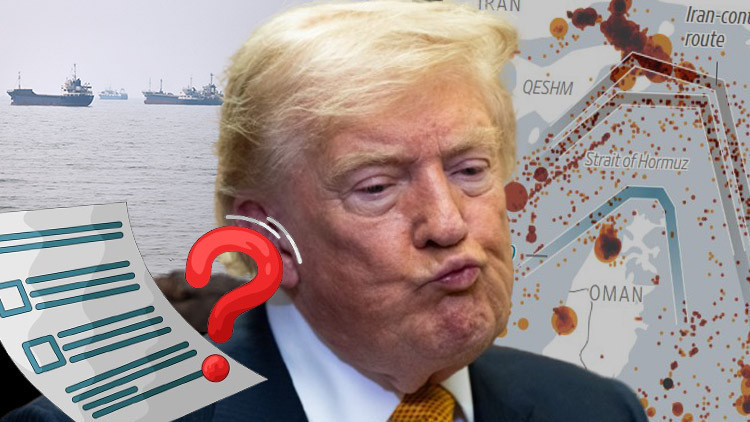
The new escalation that changed the balance of power in the Middle East is explained as resulting from a single clause within the memorandum of understanding reached between Washington and Tehran.
The memorandum, consisting of 14 articles and signed between US President Donald Trump and Iran, aimed to reopen the Strait of Hormuz to international trade and relieve pressure on global energy markets. However, the differing interpretations of Article Five in particular, which is the most important clause in the agreement, turned into the focus of a conflict of wills that led to military escalation twice over the past two weeks, according to an analysis by the Wall Street Journal.
Under Article Five, Iran had to take the necessary steps to regulate the transit of commercial ships following the signing of the memorandum, with commercial ships being able to cross the Arabian Gulf towards the Sea of Oman freely and safely for a period of 60 days without fees, with commercial shipping traffic resuming without delay.
As was the case. It was decided that Iran would complete, within 30 days, mine clearance operations and remove military obstacles, and that it would hold consultations with the countries overlooking the Arabian Gulf in accordance with the rules of international law, in addition to a dialogue with the Sultanate of Oman to determine the framework for managing the Strait of Hormuz.
According to an analysis by the Wall Street Journal, the text holds Iran responsible for reopening the Strait of Hormuz, but Tehran interpreted this wording to mean that it has the authority to control the Strait, so it tried to manage international shipping traffic. According to its own rules.
The newspaper pointed to a clear contradiction between the clause “removing technical and military obstacles” and what is actually happening on the ground, as Iranian attacks on commercial ships continued despite a memorandum.Understanding, and navigation traffic in the Strait has not returned to its normal levels.
Researcher Eloise Failley from the French research center “Evry” believes that the concessions granted to Iran have made Tehran more daring, while Eric Brewer, a former analyst with US intelligence specializing in Iranian affairs, considered that the biggest flaw in the memorandum is that it concealed the fundamental differences between the two parties regarding the status of the Strait of Hormuz, the lifting of sanctions, and the Iranian nuclear program, considering that Washington either did not realize these differences. Or deliberately ignored it.
أُنتج هذا الخبر بمساعدة الترجمة الآلية ثم خضع لمراجعة تحريرية بشرية للتحقّق من الدقّة والمصدر.



التعليقات (0)
لا توجد تعليقات بعد — كن أول من يعلّق.