
Decision paralysis in Tehran: The absence of the new leader, Mojtaba Khamenei, from appearing in public deepens the crisis of Iranian authority
An analysis revealed that Iran is experiencing a severe decision-making crisis between a movement supportive of diplomacy led by President Pezeshkian and a hard-line movement, with the crisis exacerbated by the absence of the new Supreme Leader, Mojtaba Khamenei, from appearing in public since he was injured in the attacks, which left the Iranian resolution mechanism without an actual arbiter.
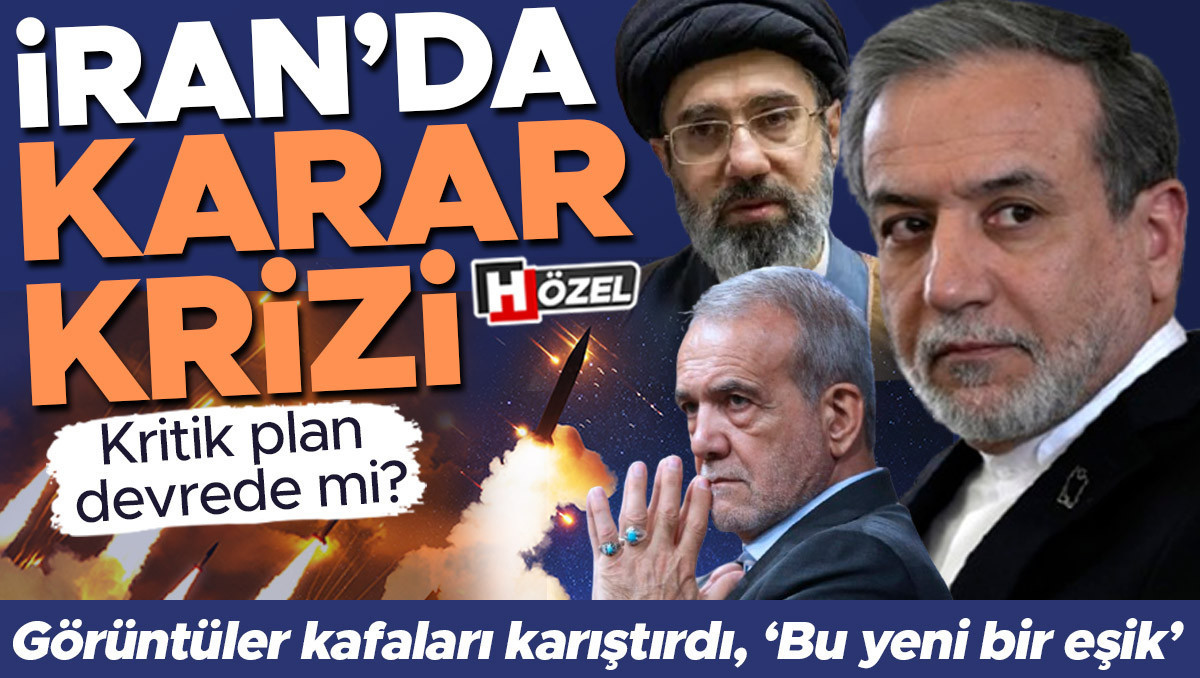
The balance of power inside Iran has reached an unprecedented level of fragility, with the conflict escalating between the movement calling for diplomacy and the movement supporting more stringent positions, at a pivotal moment that determines the future of the country.
The dispute between the two parties escalated following tension with the United States, as the diplomatic movement led by Iranian President Masoud Pezeshkian supports the continuation of talks with Washington, accusing it of violating the terms of the truce, while the conservative and hard-line movement categorically rejects any settlement with the United States, intensifying its criticism. Pezeshkian and the negotiating team in recent days.
Ural Toga, a researcher at the Center for Iranian Studies (İRAM), said that US President Donald Trump’s announcement from the NATO summit in Ankara that the truce had ended, was followed by two successive attacks over two nights, which upset the balance in favor of the apparently hard-line movement, “because the thesis that Washington’s signature cannot be trusted was confirmed on the ground in their view.”
Toga added that the basic argument of Pezeshkian’s team is that diplomacy It will achieve weaker results, but the real problem is not the competition of the wings, but rather that the position of the actual referee is actually vacant. In the Iranian regime, the “guide” determines the final balance between the wings and makes the decisive decision. However, the new guide, Mojtaba Khamenei, was injured in the attack that occurred on the first day of the war, and he has not appeared in public since he took office, which is considered the reason behind the paralysis of the decision-making mechanism. Information leaked from Tehran indicates that no decision has yet been taken regarding continuing the war or turning to diplomacy.
The researcher explained that the possibility of a permanent breakdown will not be determined by the institutional structure, but rather by the pathInheritance process; If the new leader succeeds in consolidating his authority by relying on the Iranian Revolutionary Guard, the negotiating wing will be permanently marginalized, but if he fails to do so, the current paralysis in decision-making will become the new permanent feature of Iranian foreign policy.
The internal political tension was also evident during the funeral ceremony of the former Supreme Leader Ayatollah Ali Khamenei, whose body was in the Iraqi city of Najaf when the American attacks began, before it was transported to Iran to be buried in Mashhad.
أُنتج هذا الخبر بمساعدة الترجمة الآلية ثم خضع لمراجعة تحريرية بشرية للتحقّق من الدقّة والمصدر.
التعليقات (0)
لا توجد تعليقات بعد — كن أول من يعلّق.