
The New Horizons probe is approaching the edge of the solar system after a journey of 9.5 billion kilometers
NASA announced that the New Horizons probe, which visited Pluto in 2015, is still in good condition and is preparing to send new scientific data as it approaches the limit at which the influence of the Sun fades, on a mission that may extend until 2040.
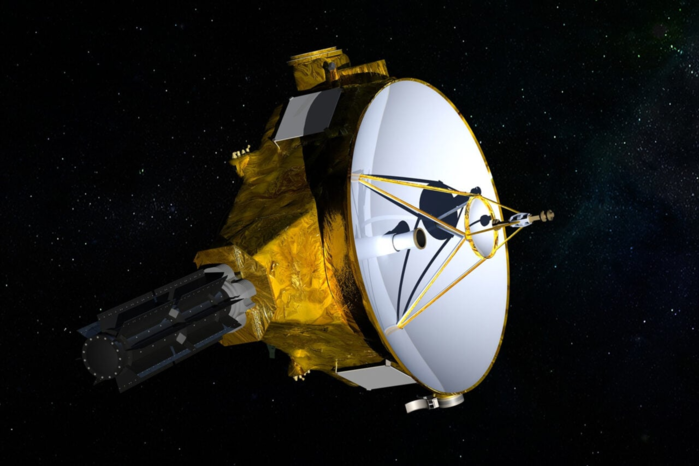
NASA's New Horizons probe is currently approximately 9.5 billion kilometers away from Earth, and the agency has confirmed that the probe is in good condition and is preparing to send new scientific data during its long journey.
New Horizons enters a hibernation mode from time to time to preserve its energy and the life of its systems during long sailing periods, and it recently returned to work at the end of June after a hibernation that lasted about 321 days.
This historic mission was launched in the year 2006, and the probe achieved a notable achievement on July 14, 2015 when it passed near Pluto, becoming the first probe to study this dwarf planet up close. In 2019, it visited the Arrokoth object in the Kuiper Belt, photographing one of the most distant and primitive celestial bodies ever studied up close.
Now, the probe is focusing on a new question that goes far beyond Pluto: Where exactly does the sun's influence in space end?
The sun constantly emits a stream of charged particles known as the solar wind, which extends beyond the planets, forming a huge bubble around the solar system known as the heliosphere, which Like a huge shield that partially protects the solar system from galactic cosmic rays.
But these boundaries are not fixed, as the bubble expands and contracts according to the sun's 11-year cycle of activity.
The region that is of particular interest to scientists is known as the "termination shock", where the solar wind suddenly slows down when it collides with the interstellar medium. The Voyager 1 and Voyager 2 probes have previously crossed these boundaries, providing humanity with the first direct data on the environment outside the sun’s protective bubble.
According to two new studies published by researchers fromSouthwest Research Institute, the arrival of New Horizons to these limits may occur as early as 2029 or as late as 2040, and this large discrepancy is due to the fact that the heliosphere is constantly moving depending on the change in the activity of the sun. The researchers believe that the probe may cross these borders more than once, because it is not like a fixed wall.
أُنتج هذا الخبر بمساعدة الترجمة الآلية ثم خضع لمراجعة تحريرية بشرية للتحقّق من الدقّة والمصدر.



التعليقات (0)
لا توجد تعليقات بعد — كن أول من يعلّق.