
Scientists succeed in simulating a black hole inside the laboratory to study "Hawking radiation"
Physicists have resorted to creating laboratory systems that mimic the physical laws of black holes, in an effort to monitor the theoretical "Hawking radiation" predicted by physicist Stephen Hawking in 1974, which is difficult to observe directly in real black holes.
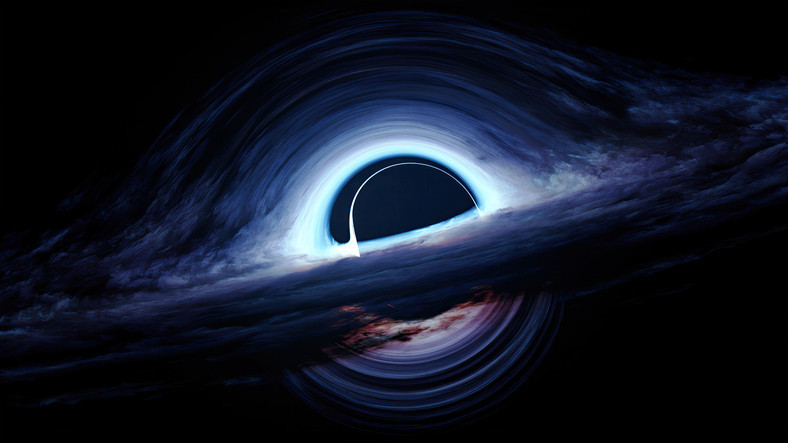
Black holes are among the densest and most extreme objects in the universe, as their gravitational force is such that it prevents even light from escaping them after crossing a certain limit known as the “event horizon.”
According to a theory proposed by physicist Stephen Hawking in 1974, black holes are not completely silent and stationary, but rather emit very weak thermal radiation due to quantum effects, known as “Hawking radiation.”
However, monitoring this radiation has not been possible. Directly into a real black hole is almost impossible, because the expected signal is much weaker than the general background radiation of the universe. Therefore, physicists resort to building laboratory systems that mimic the laws of physics themselves, instead of studying black holes directly.
أُنتج هذا الخبر بمساعدة الترجمة الآلية ثم خضع لمراجعة تحريرية بشرية للتحقّق من الدقّة والمصدر.



التعليقات (0)
لا توجد تعليقات بعد — كن أول من يعلّق.